
Layered Lines

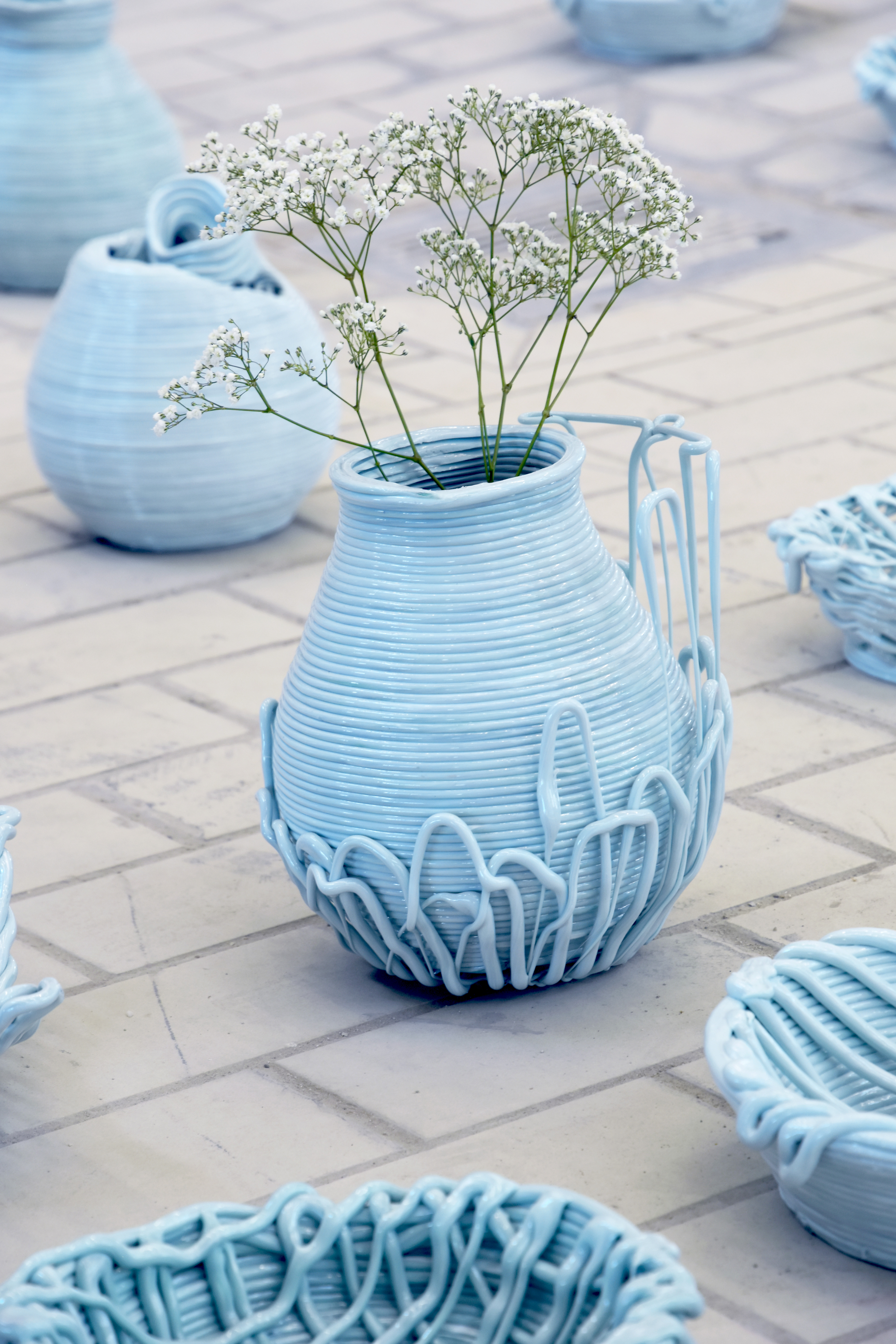
Layered lines explores the boundaries of what is possible with large-scale 3D printing, where I developed techniques such as draping, spanning and stacking the printed recycled plastic into molds. I was able to develop a series of objects with intricate patterns and textures.
These patterns result from of manually changed settings during the prints, allowing gravity to interact with the material, how it stretches and deforms before it hardens. This makes the process repeatable but unique for each printed object. These techniques have the potential to be scaled up for future application in furniture design, or even architecture.
These patterns result from of manually changed settings during the prints, allowing gravity to interact with the material, how it stretches and deforms before it hardens. This makes the process repeatable but unique for each printed object. These techniques have the potential to be scaled up for future application in furniture design, or even architecture.


Thermae

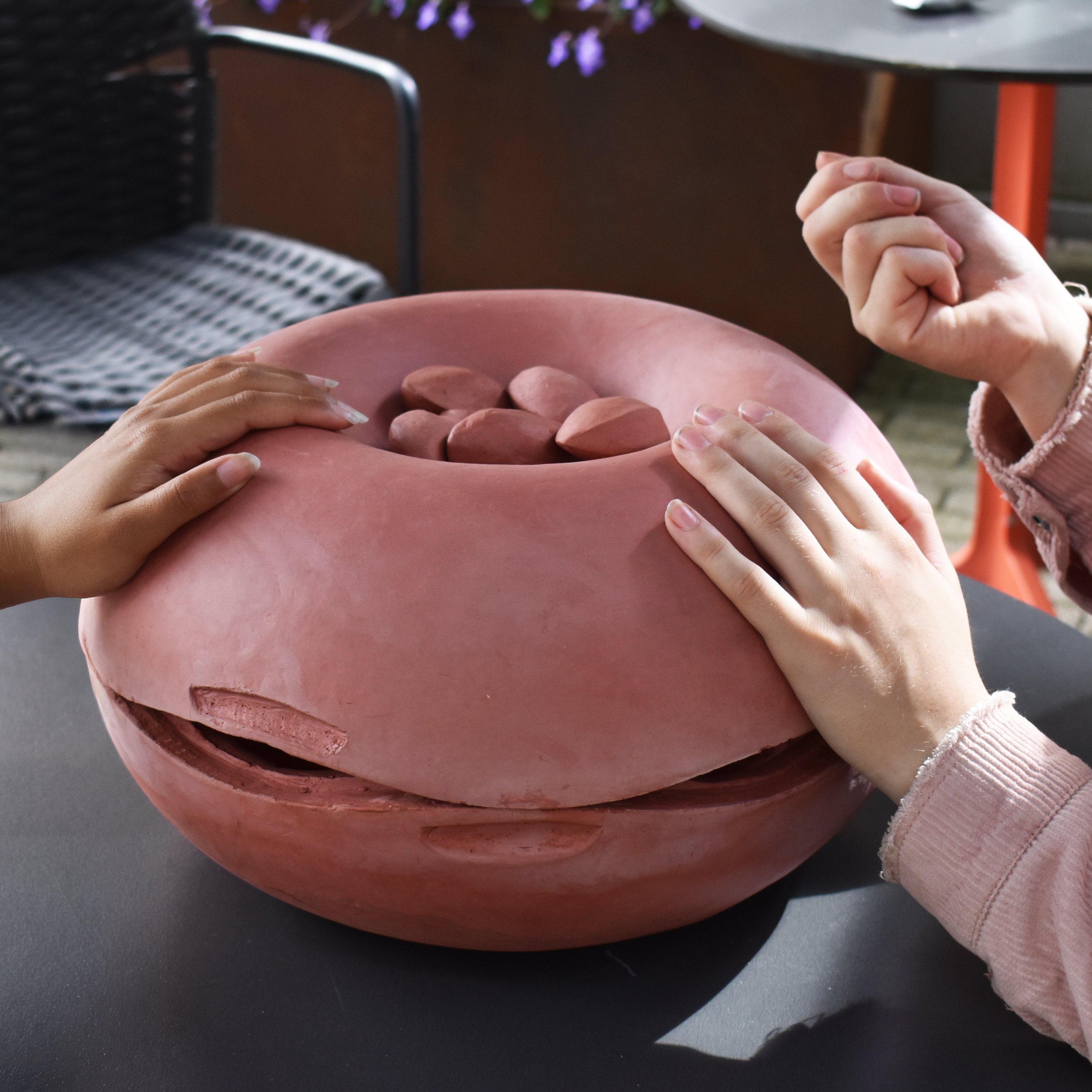
In winter, when there are limited free spaces for communities to come together, loneliness becomes increasingly common. By placing Thermae on tabletops, both indoors and outdoors, it fosters community by encouraging closeness and conversation in a comfortable environment.
Throughout the Roman Empire, there were bathhouses in every village. These were places for the community to socialise, exercise, and share the experience in the comfort of heat. Across cultures and eras, people have gathered around heat. Whether it is fires, stoves or bathhouses, it became a social ritual. In collaboration with the province of South Holland and partners across the Roman Limes, a historic frontier of the Roman Empire,
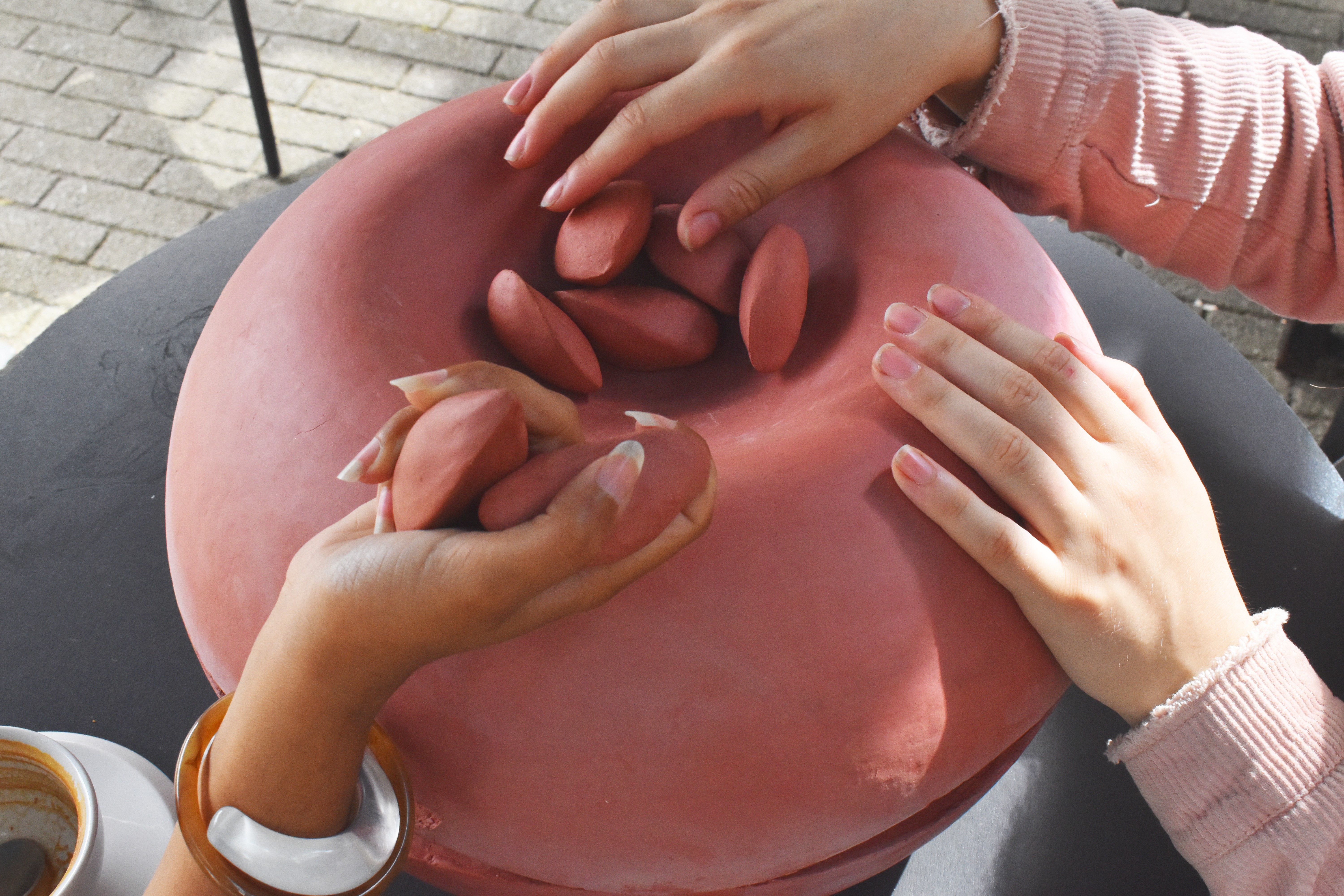
Thermae consists of a terracotta table heater inspired by the heating system used in the bathhouses. The terracotta heater’s shape is designed to invite people to come around it and touch it to feel the warmth. Inside it, candles are lit as the heat is directed towards the dome, where heat is transferred to the terracotta hand warmers. When it’s time to extinguish the candles, the air flow is restricted by rotating the upper half to close the holes. If placed in community spaces, it mirrors the social function of the bathhouse of bringing people together, while materialising the technology in a modern context.
As Kris de Decker wrote, “Heating people, not spaces” is an approach to heating technology which prioritises thermal comfort in spaces through radiative heat. The technology of the bathhouse works with the principle of radiative heat, which has been used for centuries. By reimagining Roman heating technology for today’s community spaces, Thermae weaves the times of then and now, proposing an alternative, more communal approach to modern heating systems.


Personal Project
Sep-Oct 2023![]()
Sep-Oct 2023
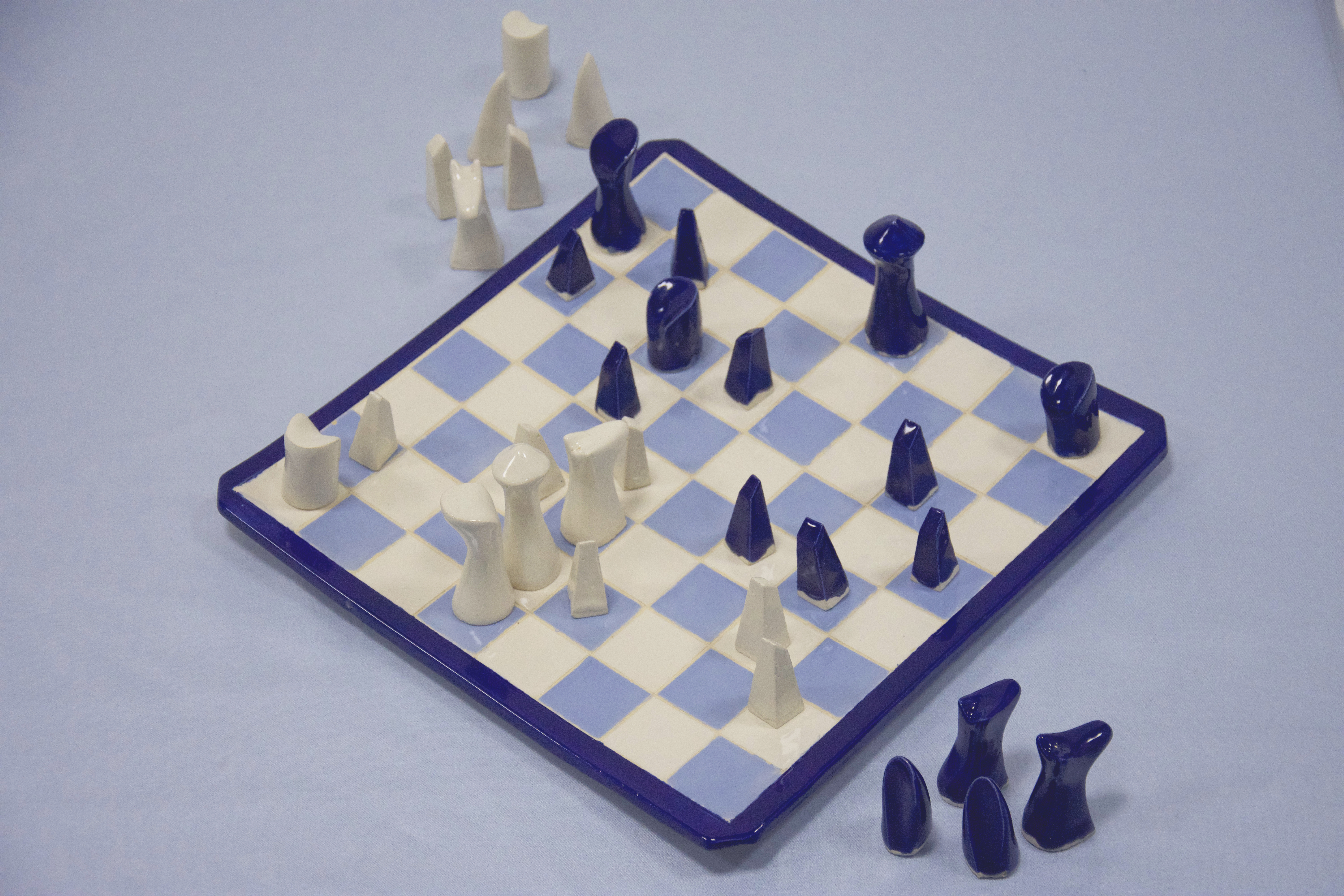
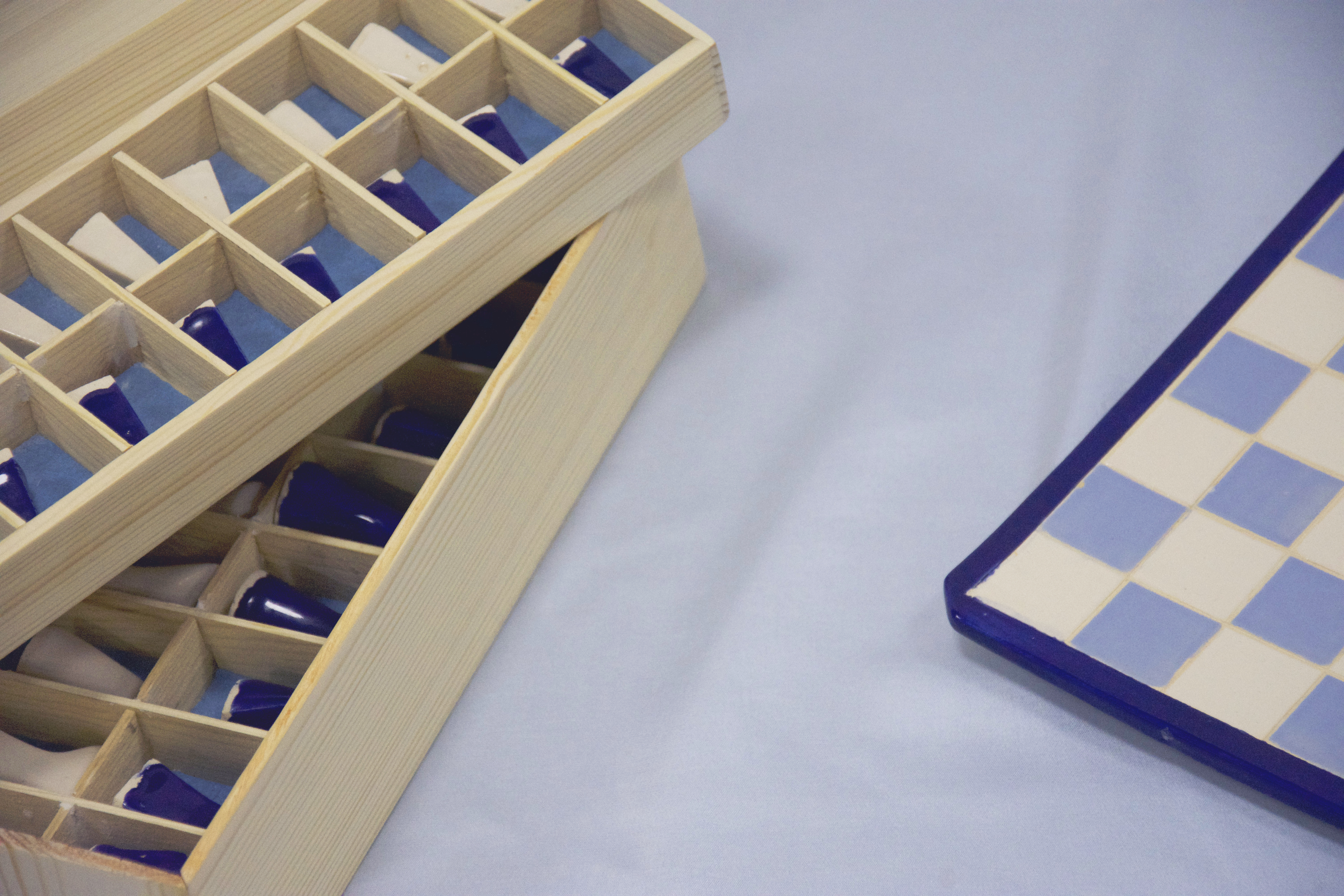
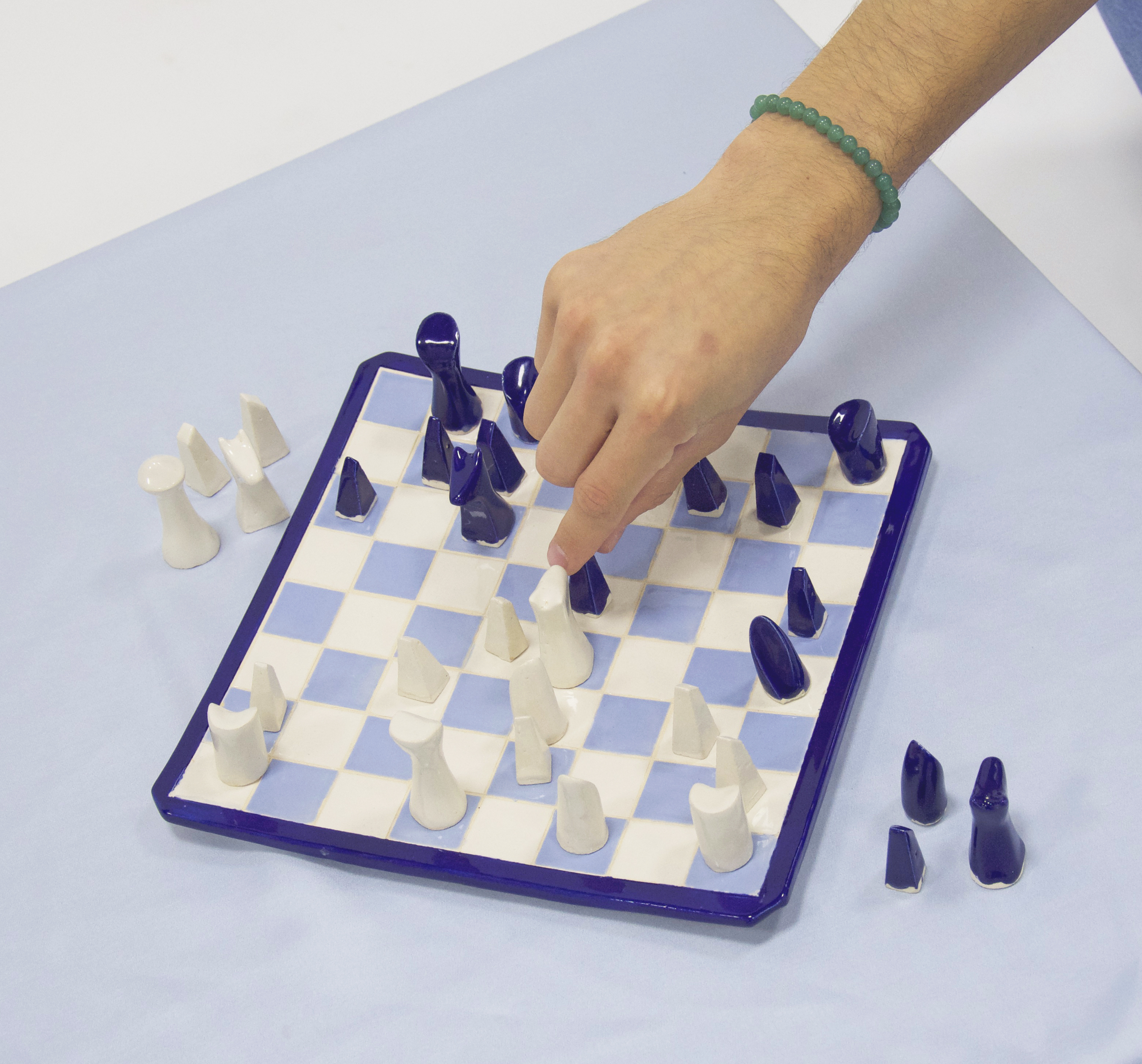
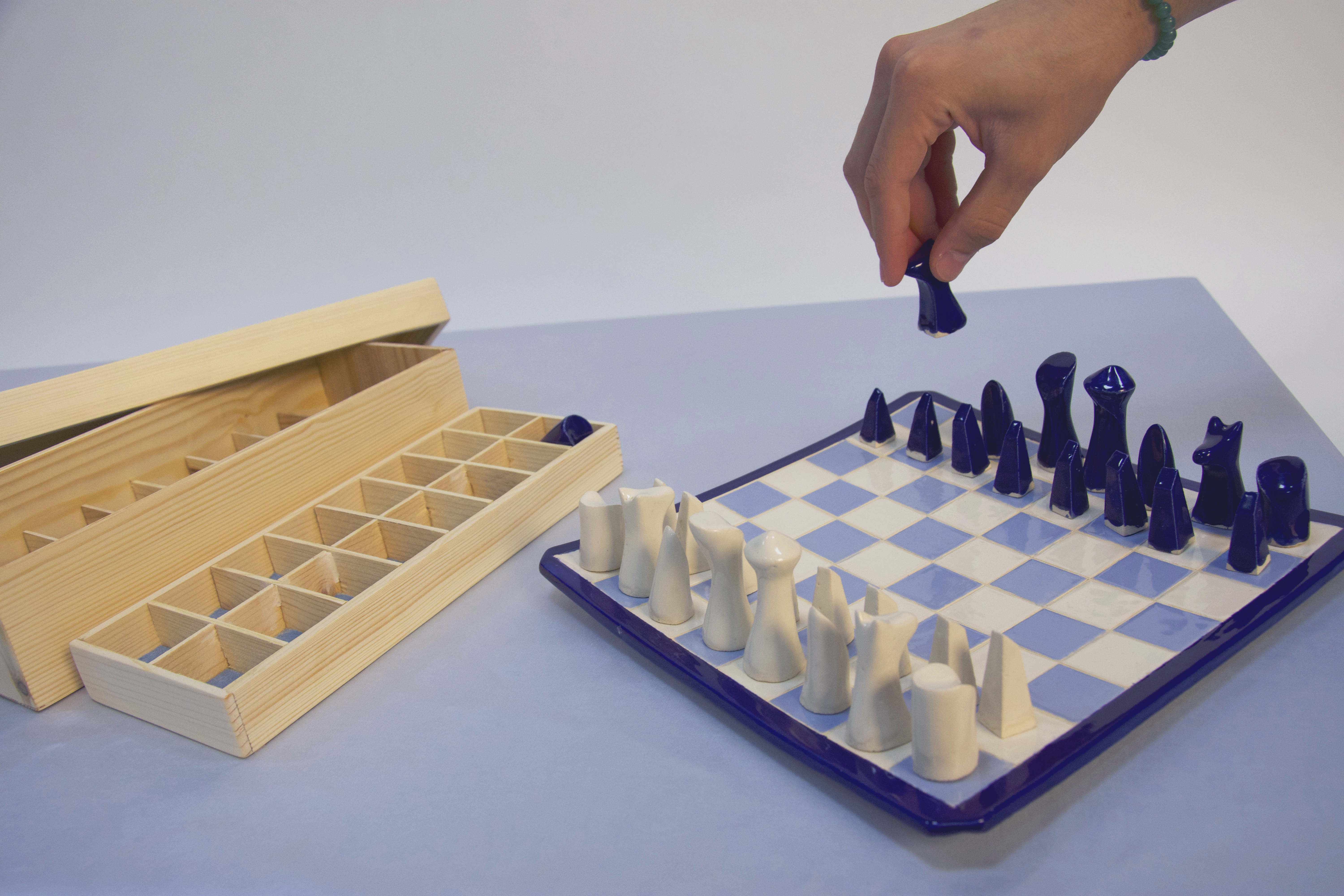
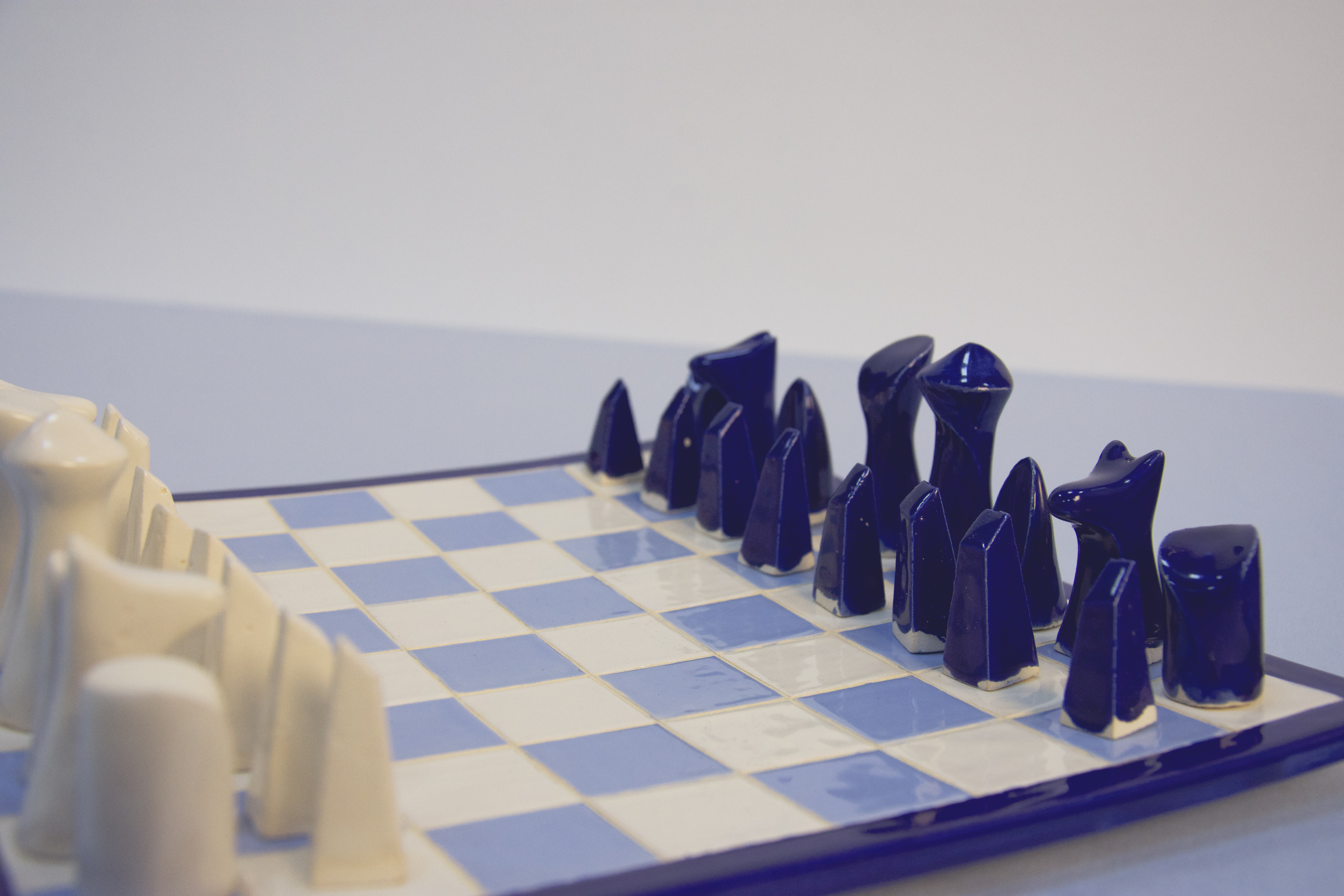
Ceramic chess set inspired by the forms and movement of water.
Each piece is hand sculpted and designed based on the forms of the traditional chess sets but with inspirations from water and elegance of nature. The board is also ceramic with complementing light blue glaze. The wooden storage box has two layers with sections to keep the pieces protected.
Inspiration
The flow of water can be compared to the tactics in chess. Water flows around obstacles and takes the path of least resistance, much like chess players need to navigate their pieces through a complex board while adapting to their opponent's moves.
The flow of water can be compared to the tactics in chess. Water flows around obstacles and takes the path of least resistance, much like chess players need to navigate their pieces through a complex board while adapting to their opponent's moves.





A chess set has a very standard design for the pieces with a long history and like these examples, I want to develop a new design using my design language based on the familiar pieces we all know.
Process


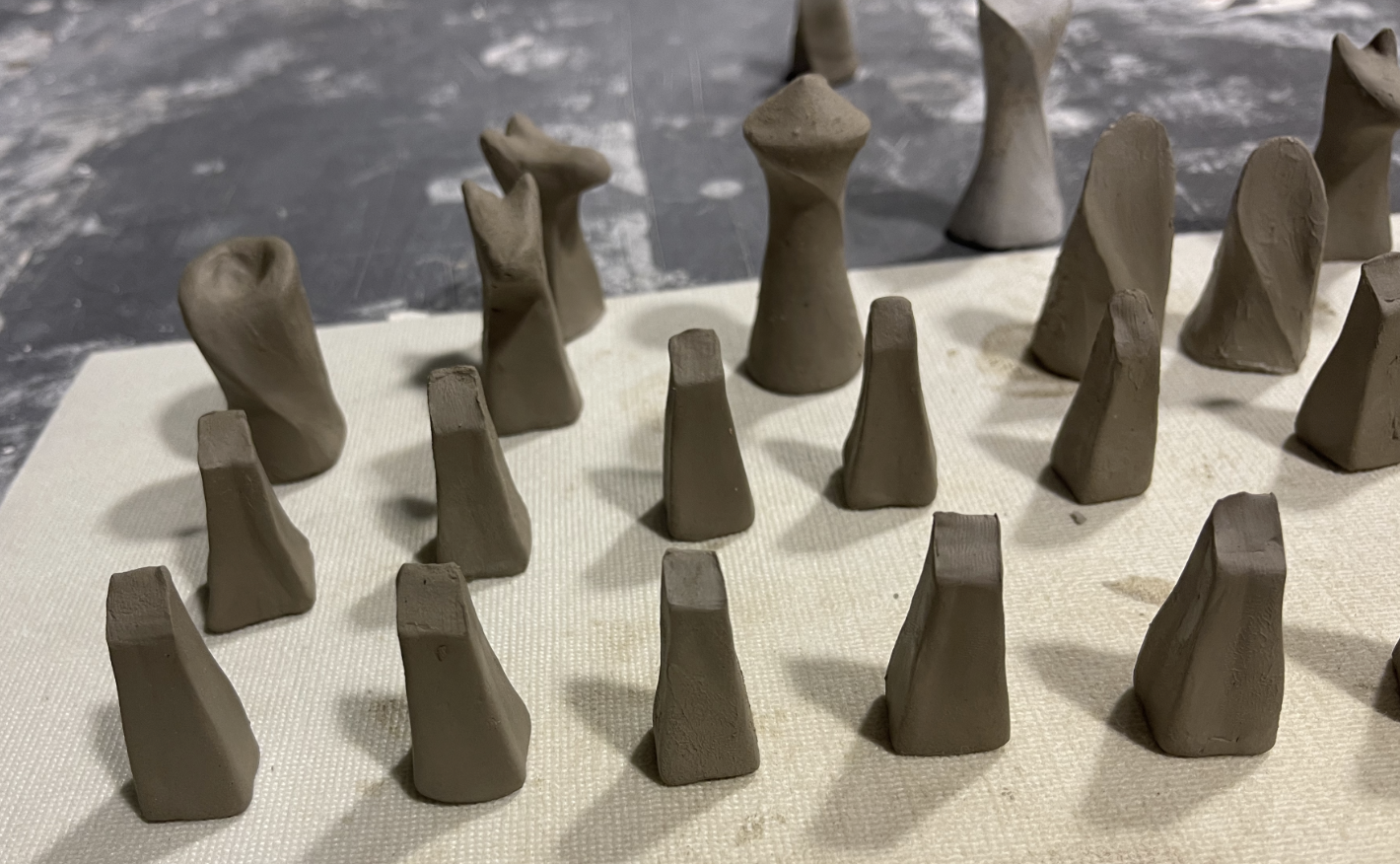
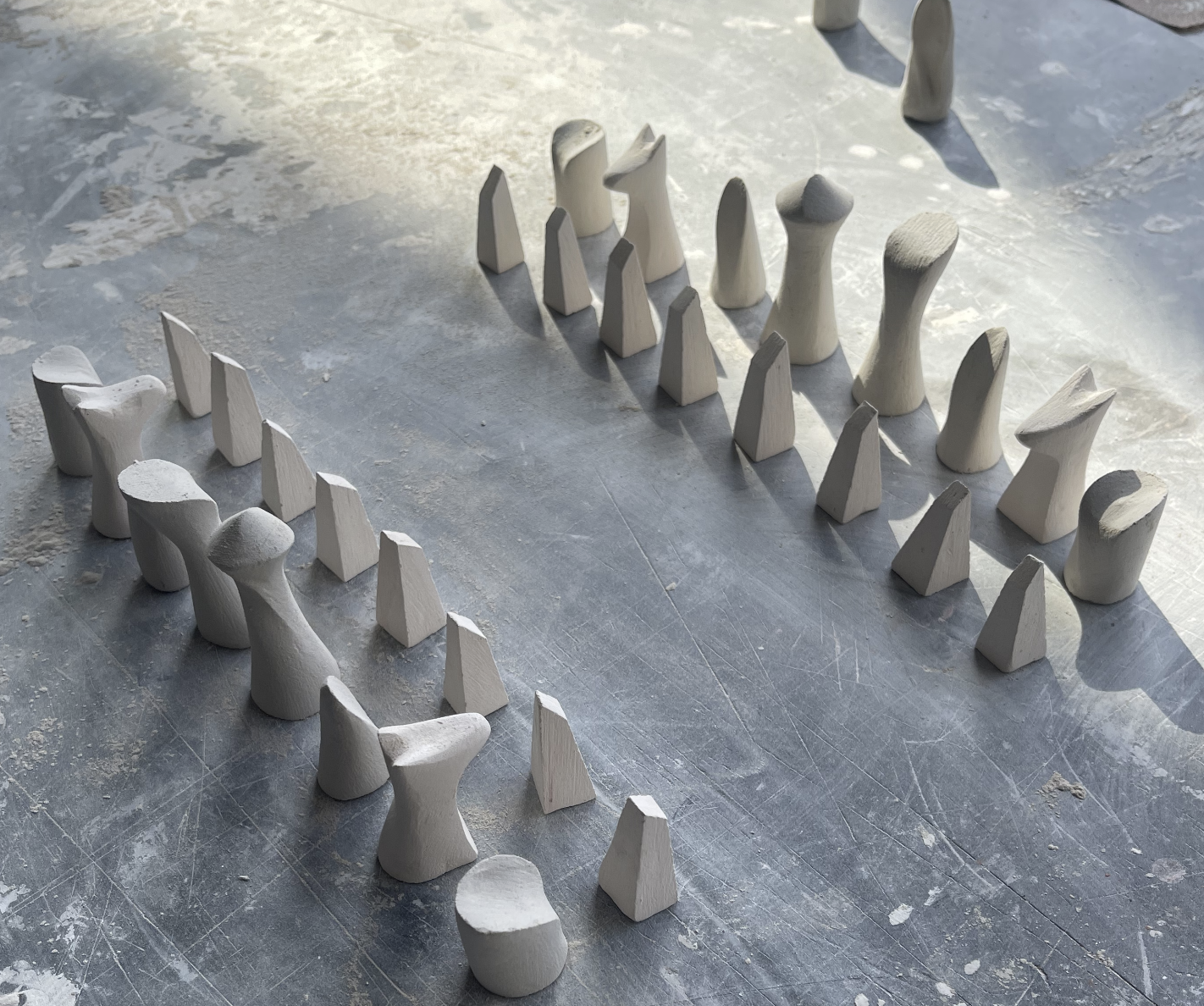

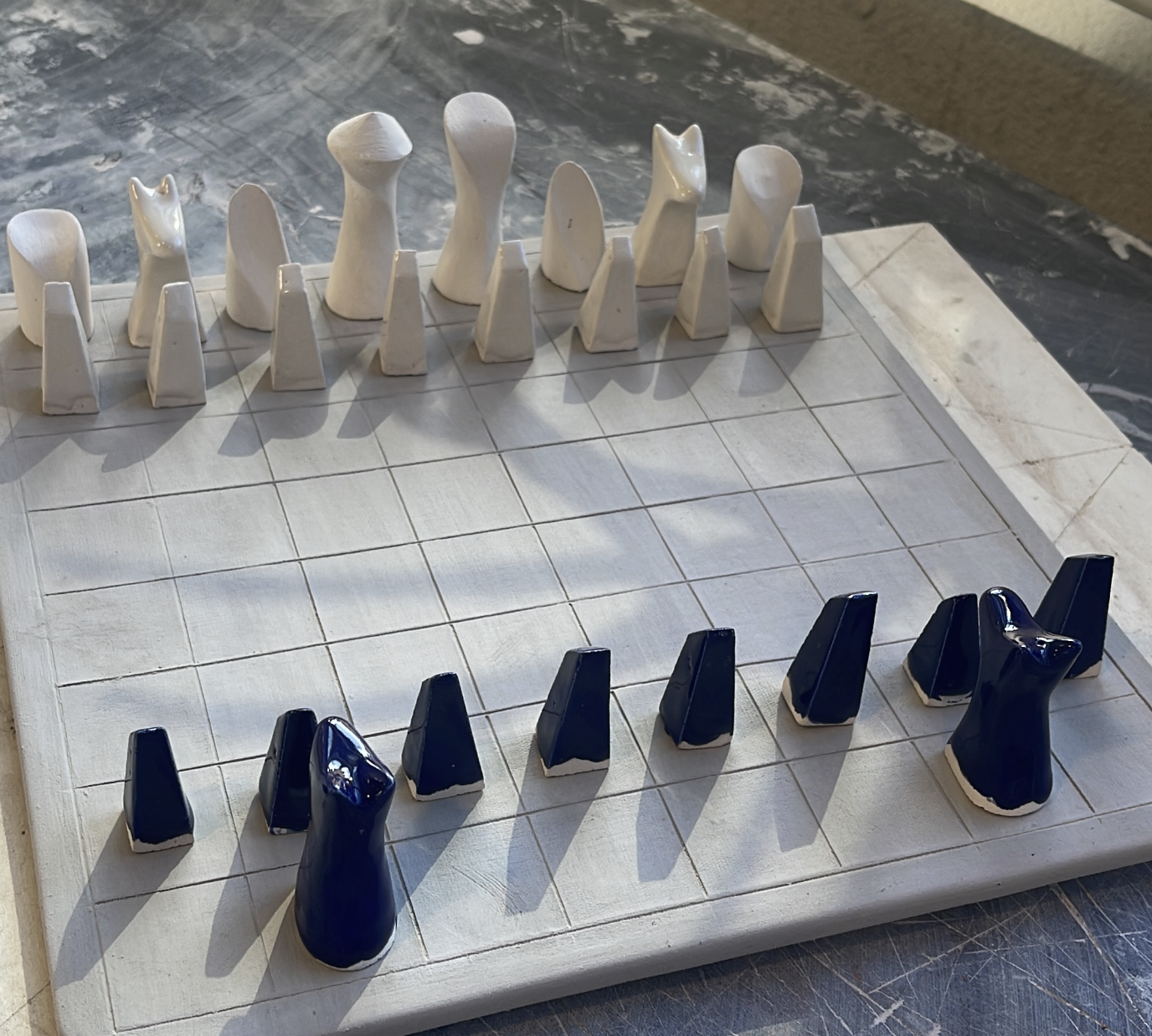

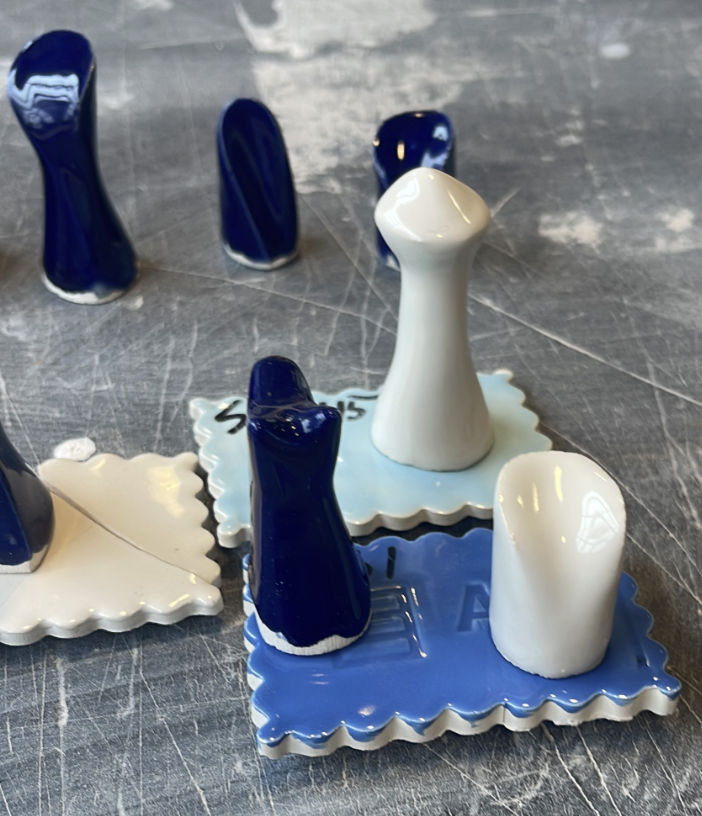


The Delta Series

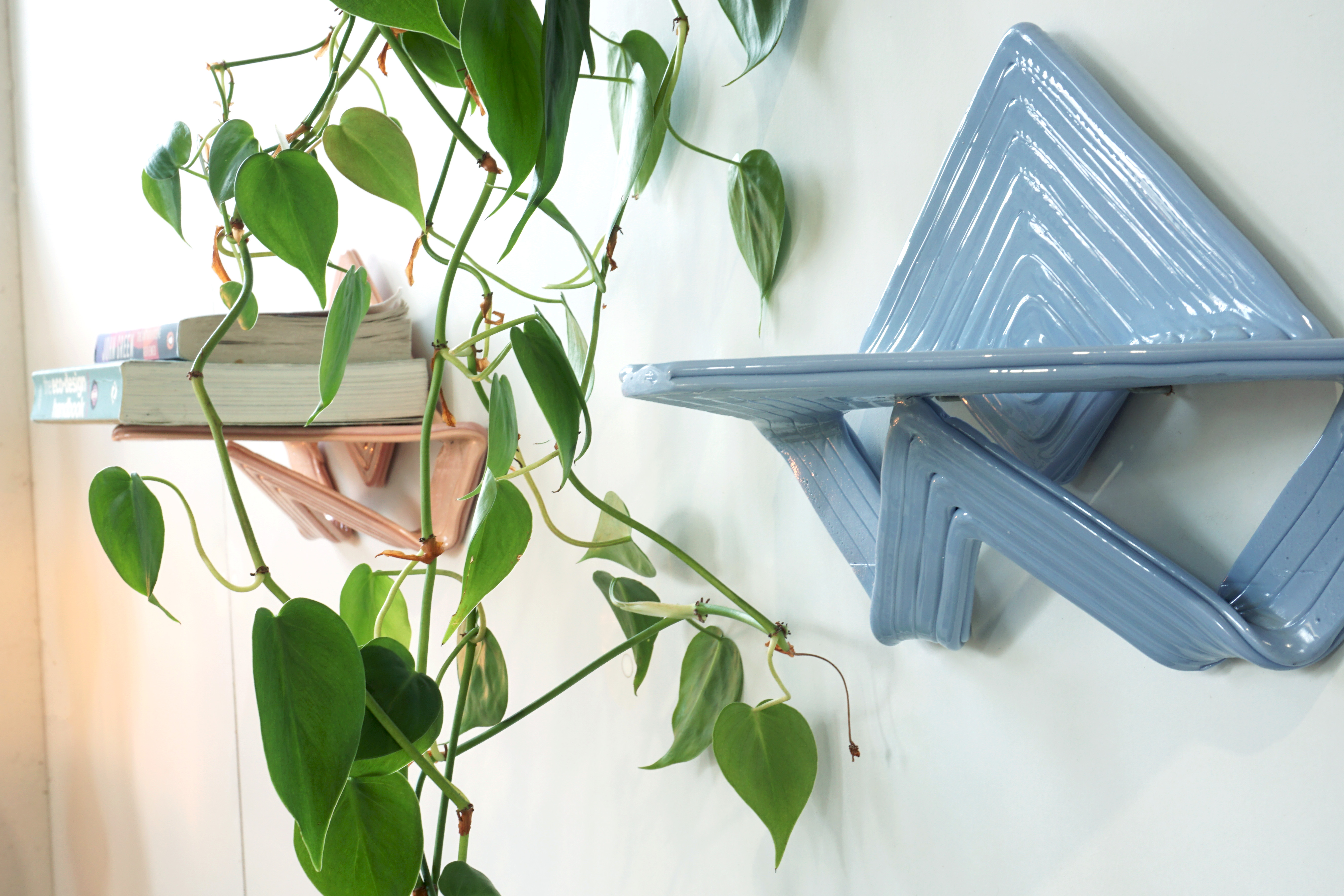
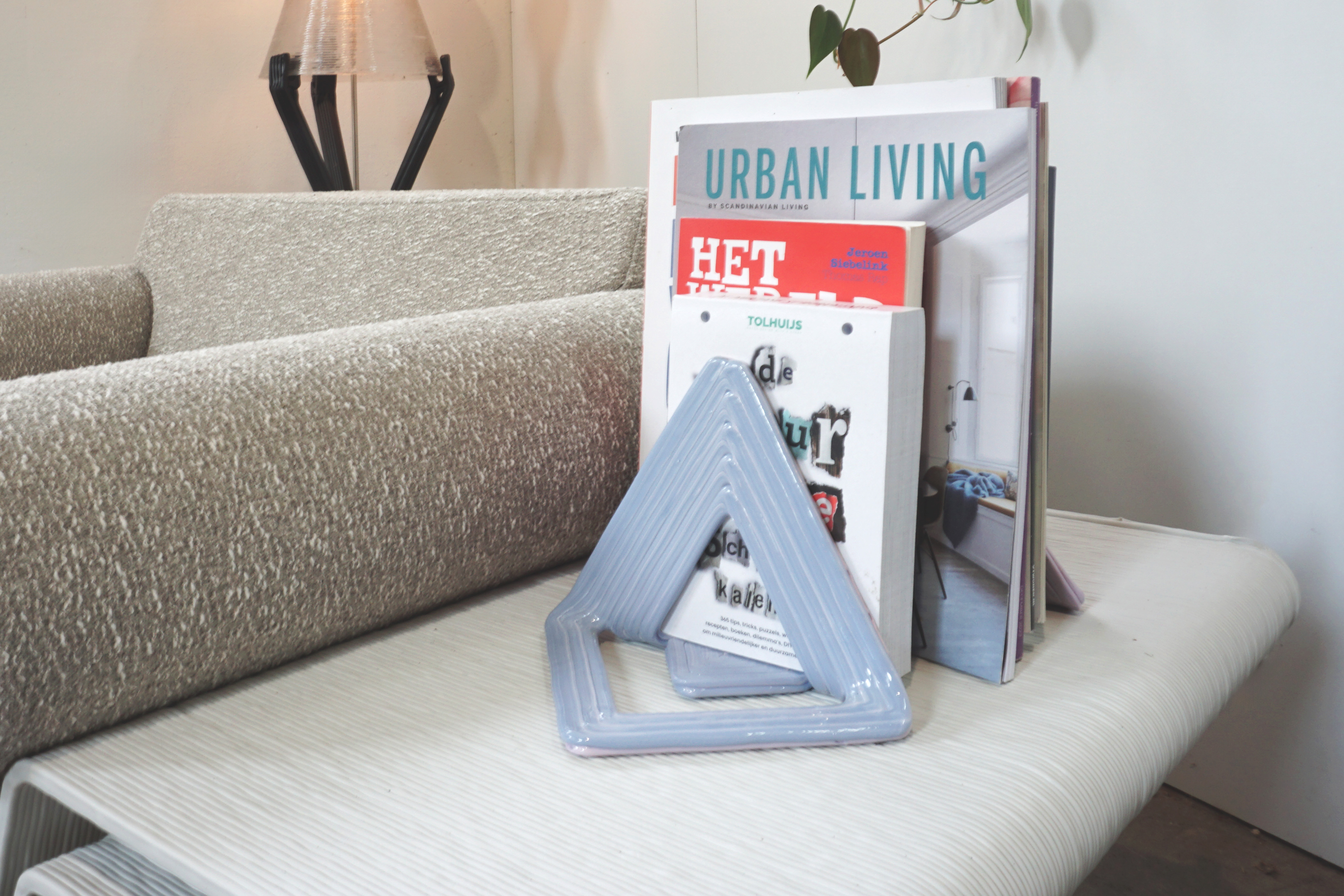
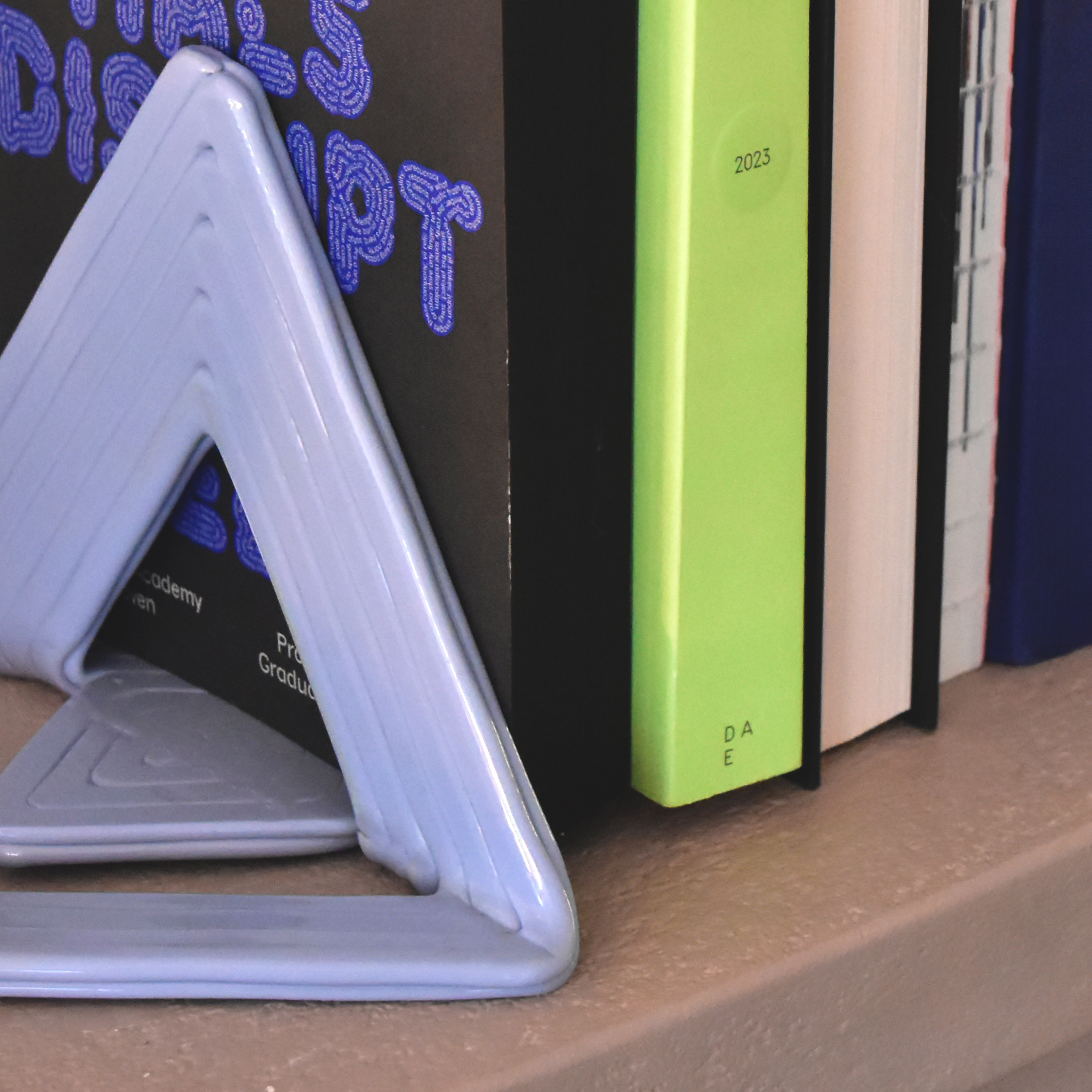
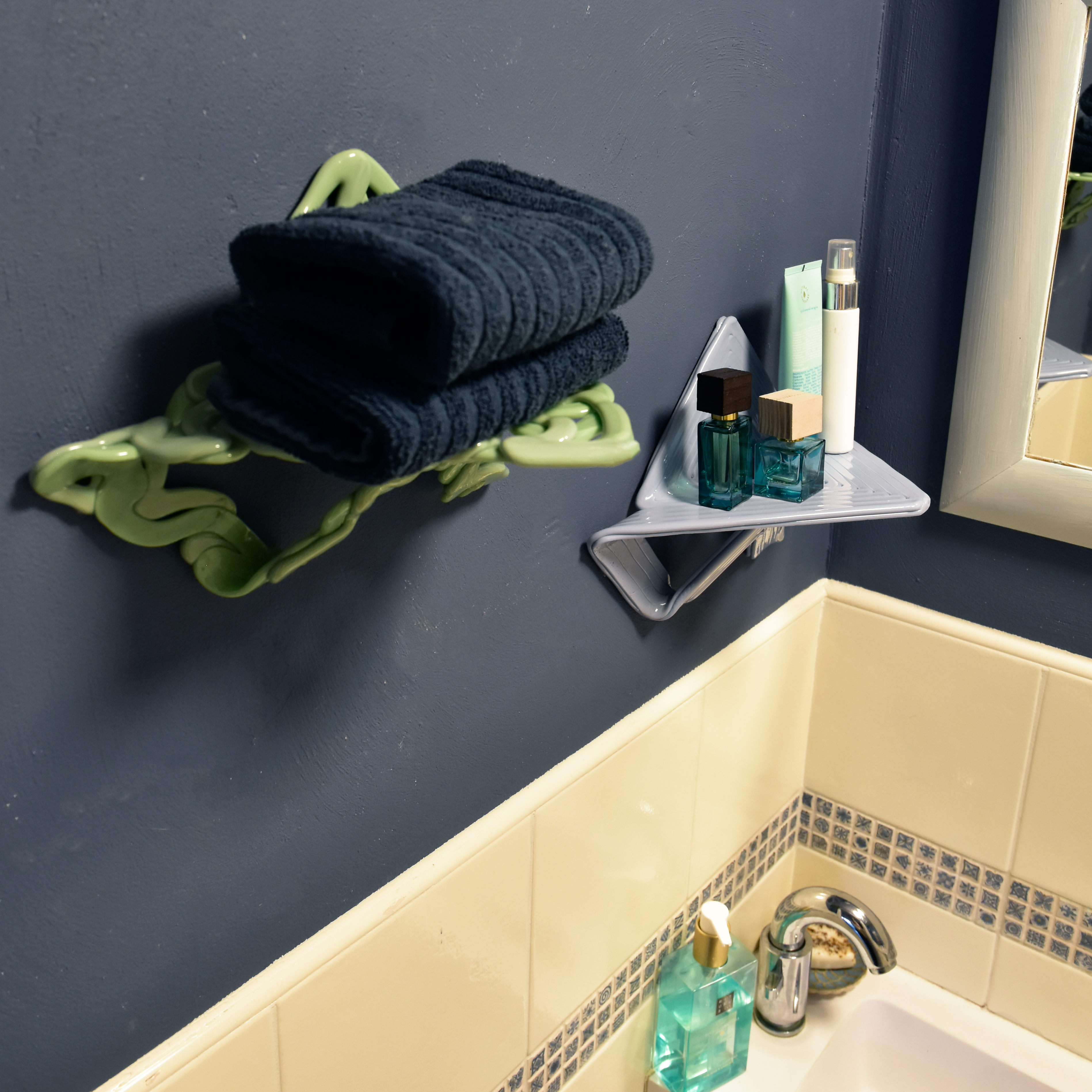
I completed my internship at vanPlestik who use recycled plastic to create beautiful 3D printed objects. I designed this a collection of products using a technique of printing 2D and then folding the shapes into 3D products.
Using this technique I created a set of book dividers, wall shelves and a laptop stand. Using this technique extends the possibilities of 3D printing, adds an element of craft to the products as well as allows for design variations in patterns used in a lattice structure.

The collective feeling of isolation and disconnectedness in the era of hyper-connectivity is one of our generation’s greatest ironies. In a world where we are being overwhelmed by digital influence, we find ourselves losing contact with our environment and each other.
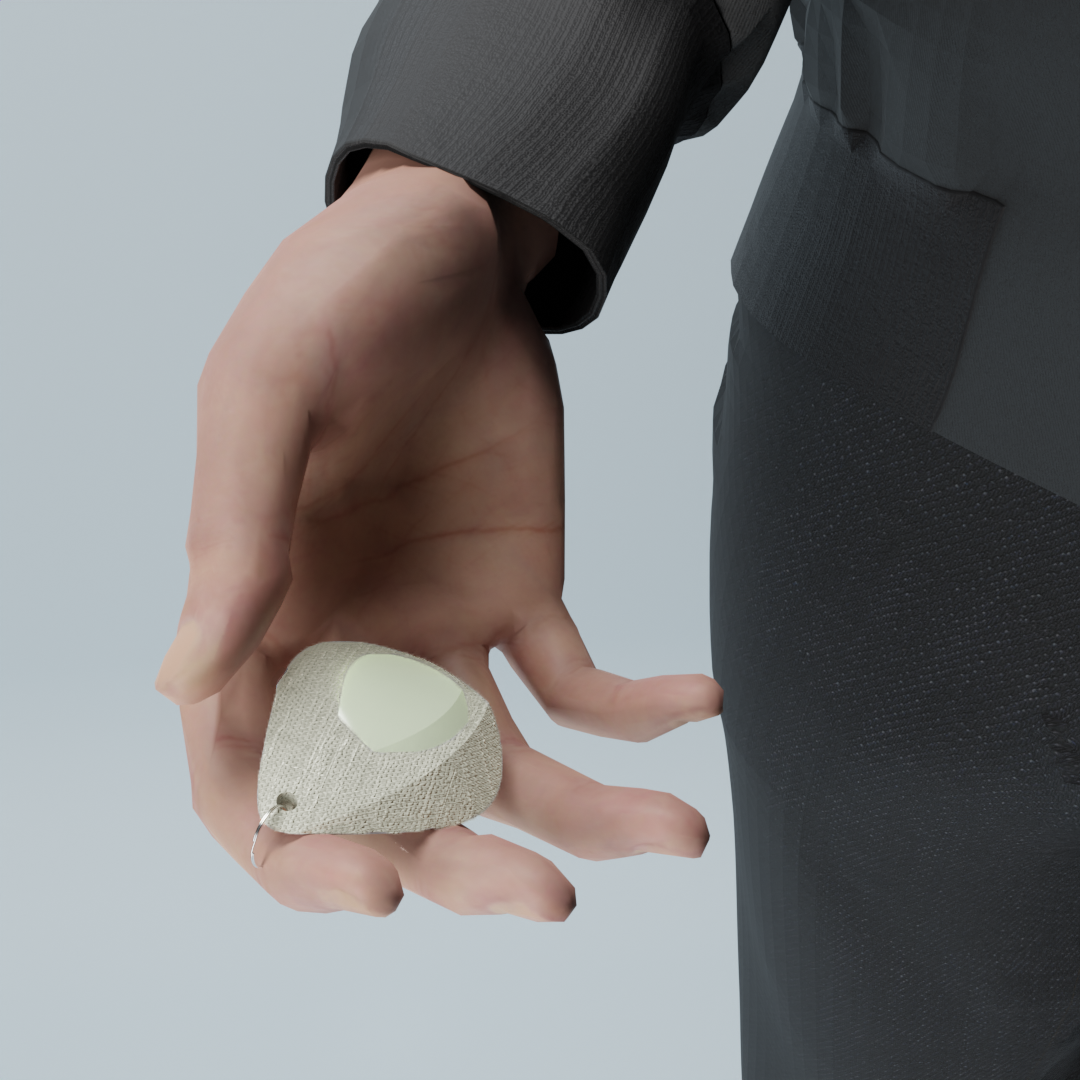
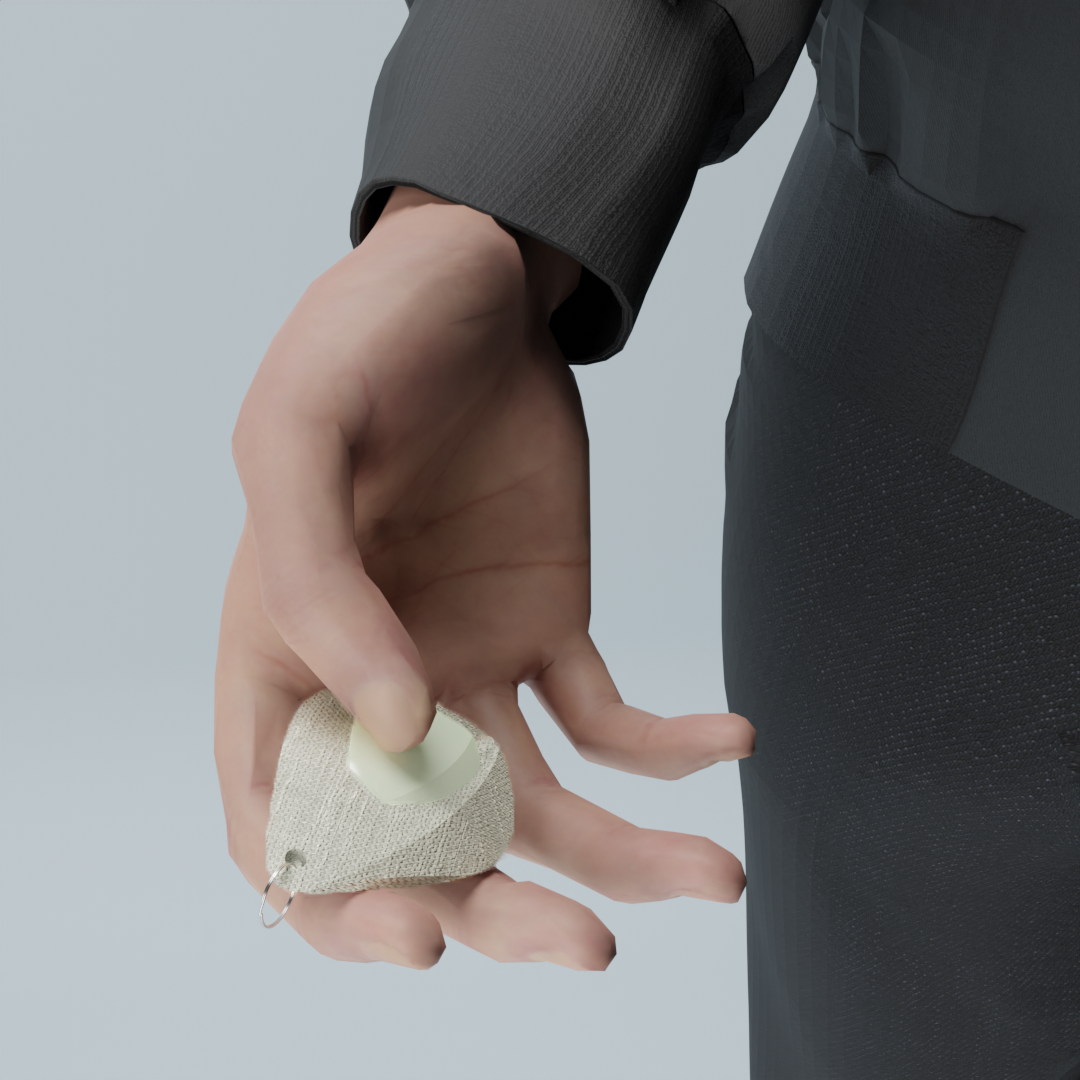
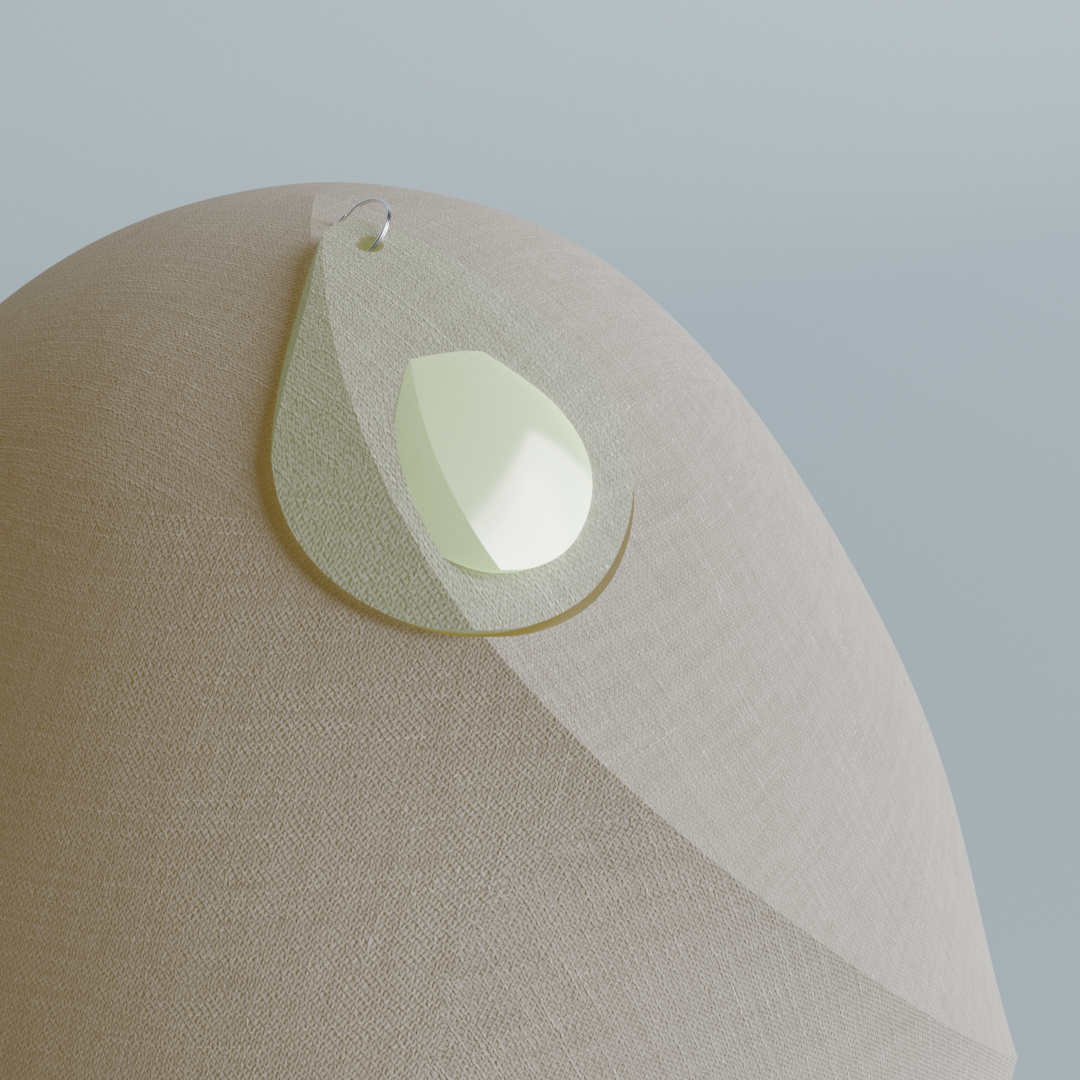
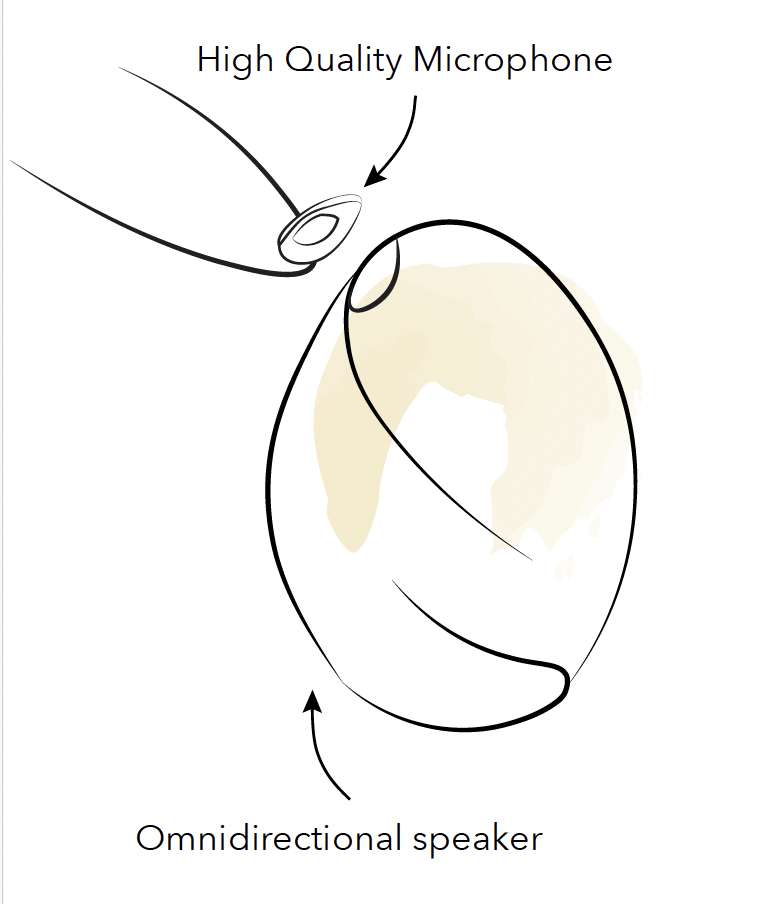
Instead of capturing visual memories, users capture auditory memories with the portable microphone element. Then using an integrated home speaker system, the sounds they collected are compiled and sorted into an archive where an AI Algorithm composes soundscapes related to a mood, day or place.



Story Board
![]()
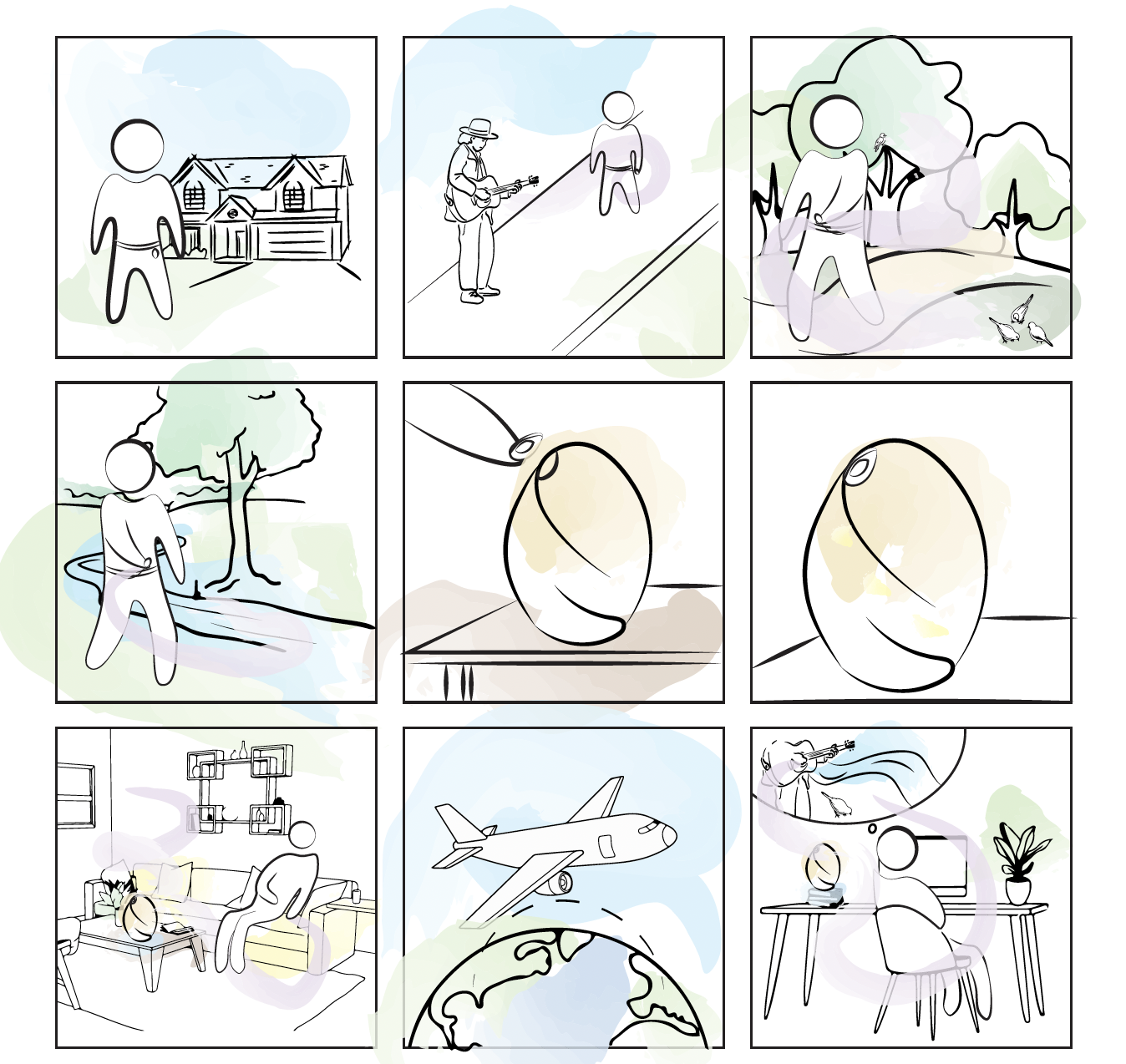
This storyboard illustrates how “Resonance” would be used by giving an example of this potential user’s story. The user records sounds he resonates with throughout his daily life and enjoys listening to the soundscapes of the sounds of comforting memories when he relaxes at home. One day he has to move abroad for work, and although he’s far away and does miss home sometimes, he finds comfort in listening to the sounds he recorded and the soundscapes made by “Resonance” make him feel like he’s not too far after all.
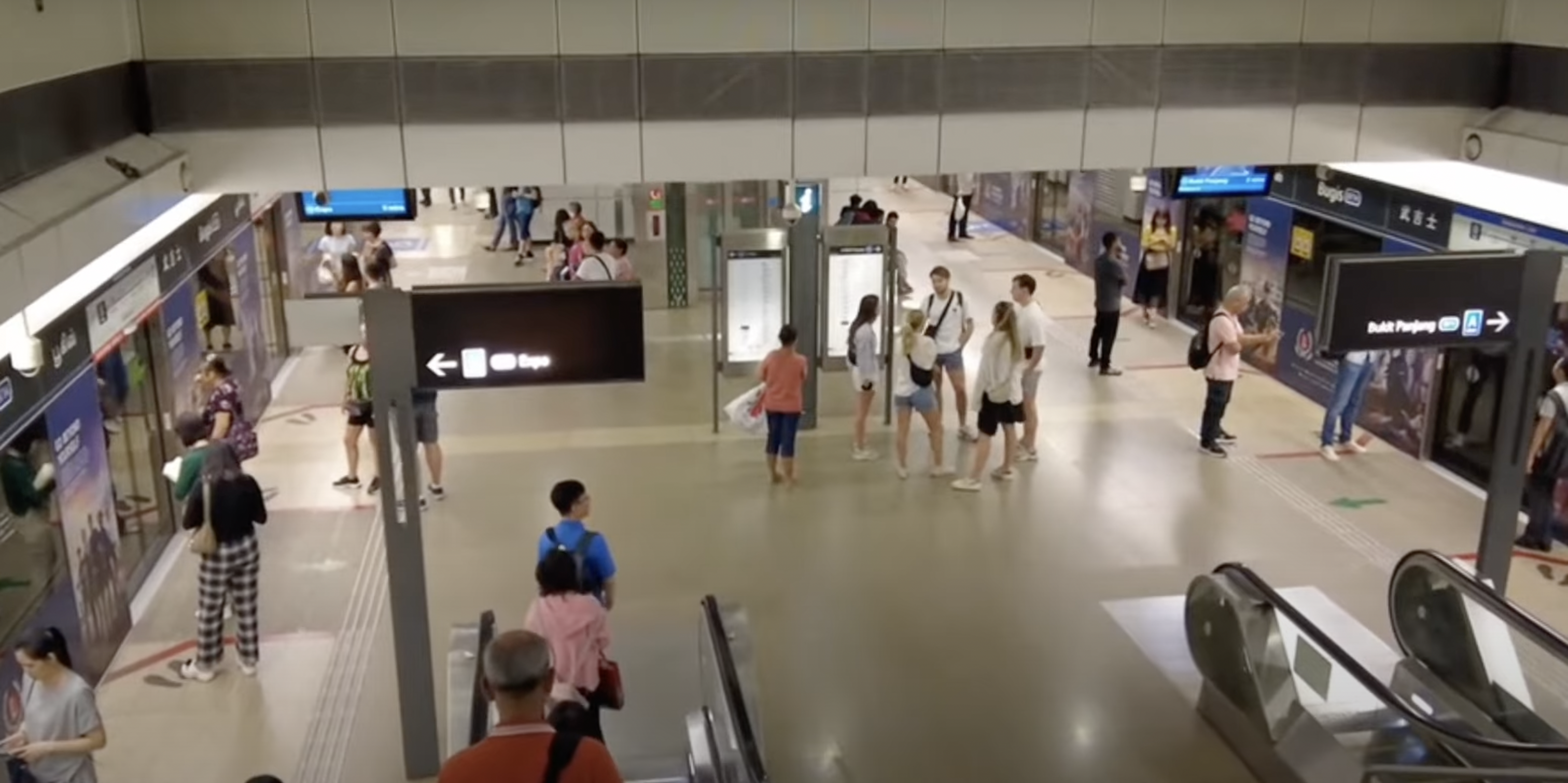
Singapore SoundscapeI developed this design during my exchange semester in Singapore so I
noticed a lot of differences in the sounds compared to back home in The Netherlands. To demonstrate what the soundscape could potentially sound like I created a version from sounds I recorded over a couple of weeks in Singapore.
This soundscape shows the potential of what a melodic soundscape could sound like but the AI system would be able to create various types of soundscapes in addition to melodic such as ambient or rhythmic soundscapes.
This soundscape shows the potential of what a melodic soundscape could sound like but the AI system would be able to create various types of soundscapes in addition to melodic such as ambient or rhythmic soundscapes.
︎
